


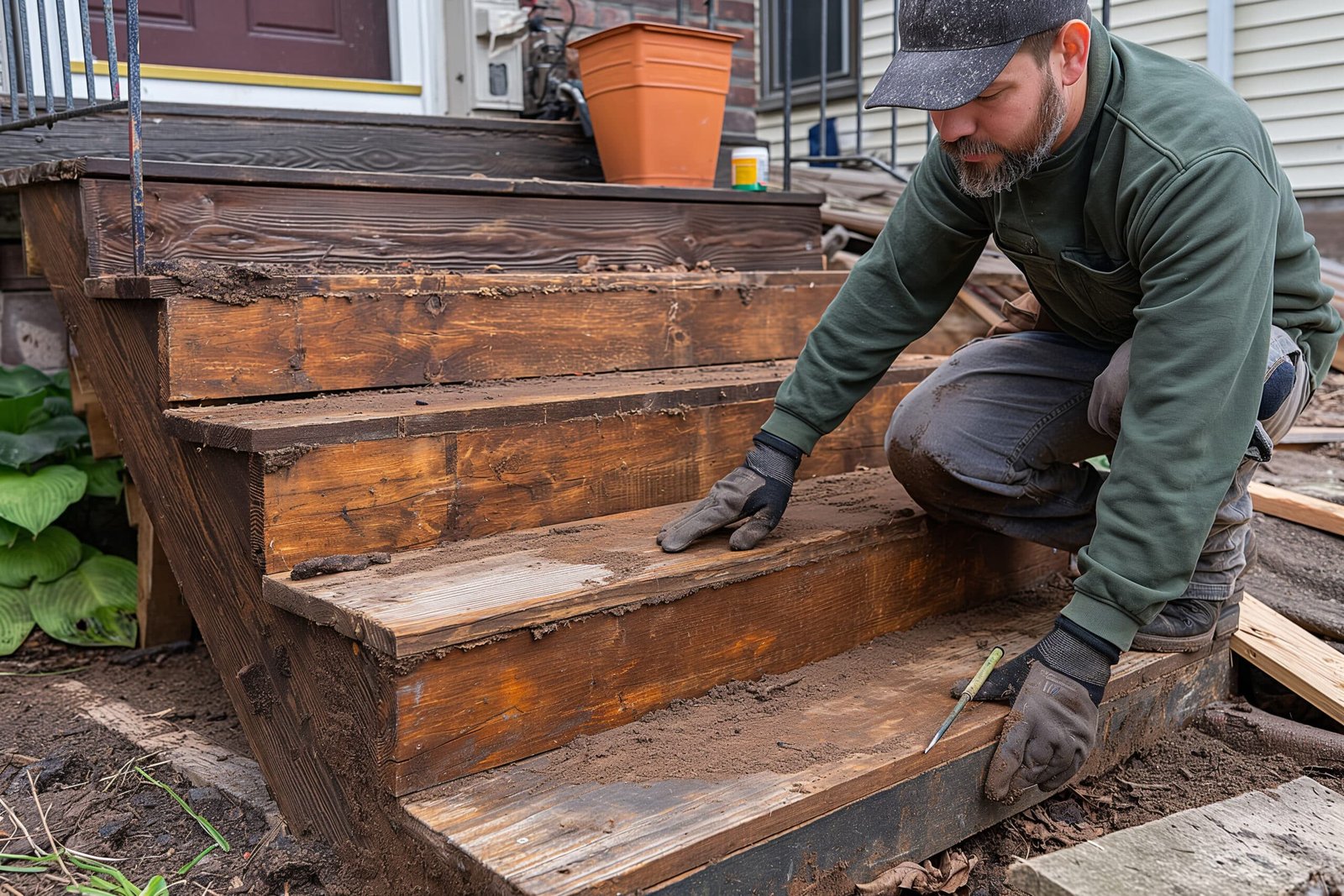
Regular seasonal care maintains your deck’s safety and structural integrity through changing weather cycles. With routine inspections, you can catch minor issues before they become a structural hazard. Here are some maintenance tips for your deck repair:
Inspect Wood Surfaces
A thorough evaluation of wood surfaces helps extend the life of your outdoor living area. When weather conditions shift, wooden structures endure stress from moisture and temperature fluctuations. Structural inspections allow professionals to identify surface changes such as cracks. They can make repairs before issues become bigger problems.
By identifying structural issues early, handymen can safeguard the underlying support system. Experts inspect support posts, ledger boards, and baluster spacing. To assess how moisture affects different lumber varieties, they look for soft spots or raised grain.
After surface inspections, professionals offer remedies to restore your deck. If the support framing is sturdy, experts may replace individual damaged or warped planks. They tighten loose fasteners and secure shaky handrails to address specific wear points.
To finish the restoration, handymen apply advanced surface finishes to extend the wood’s lifespan. Power washing removes biological growth and grime without bruising the wood fibers. After the surface dries, professionals apply protective sealants to shield the lumber from moisture penetration and UV rays.
Reinforce Joist Hangers
Professionals reinforce joist hangers during deck repair since these metal brackets carry the load of the floor joists. Over time, moisture can settle into structural joints, causing fasteners to rust and loosen, compromising deck safety. Strengthening these hidden metal hangers prevents structural connections from failing and extends the framework’s service life.
Reinforcing joist hangers addresses structural sagging and restores a sturdy walking surface across the upper floorboards. When joist hangers pull away from the main ledger board, individual framing beams drop lower, causing surface planks to warp. These surface planks unevenly flex under heavy foot traffic.
When handymen add structural screws to the hanger configurations, they align the sagging joists with the rest of the support framework. The leveling technique eliminates dips and distributes weight evenly across the surface. A well-reinforced frame absorbs forces from strong winds and snow loads without shifting.
Handle Adjacent Repairs
Professionals perform adjacent repairs to prevent peripheral issues from compromising the newly restored deck. Overflowing gutters and damaged fencing can shift structural alignment if left unaddressed. Experts perform these tasks during deck restoration:
- Clearing clogged gutters
- Restoring rotting fascia boards
- Extending downspout lines
Stain Wood Surfaces
Staining wood surfaces seals raw wood fibers from harsh environmental damage. When exposed lumber is left untreated, solar radiation causes the planks to warp and splinter over time. Timely stain applications shield wood from ultraviolet rays, extending the lifespan of new and existing boards.
Modern staining formulas provide moisture resistance. If melting snow or rain continuously penetrates lumber, the wood fibers expand when wet and contract as they dry. This repetitive cycle causes fasteners to pop out of place.
Upgrading Deck Railings
Upgrading the railings addresses perimeter safety while restoring the deck boundary. As a deck ages, handrails may loosen, and balusters may become shaky. To resolve the issue, professionals upgrade the rails to create a rigid load-bearing safety system.
Learn More About Deck Repair
A seasonal deck maintenance plan increases your property’s functional value. When professionals perform surface inspections and board replacements, they prevent minor issues from worsening. Contact a handyman service provider to learn more about what they offer.