


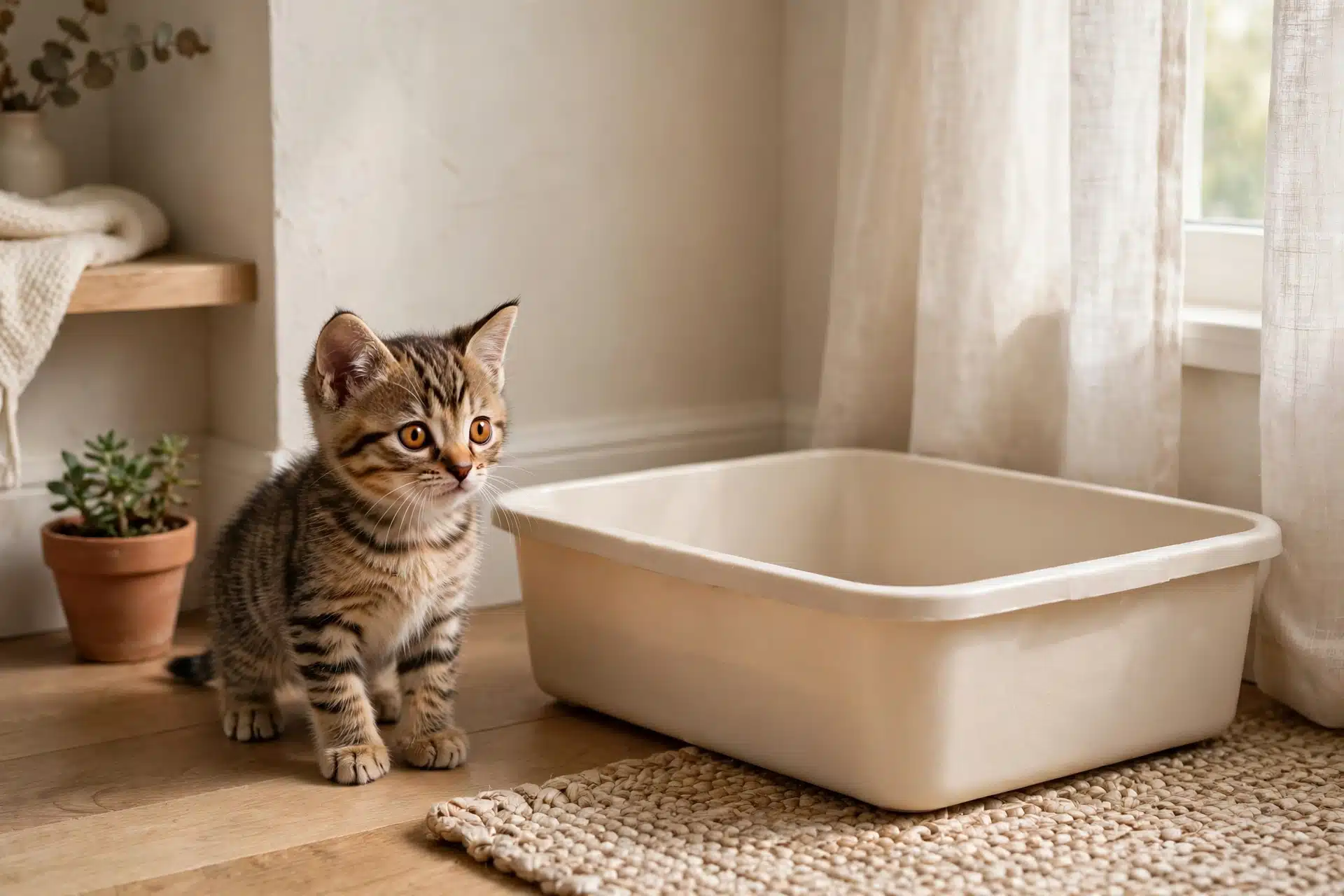
How to Litter Train a Kitten: A Gentle Guide
If you have just brought a kitten home, here is some good news: litter training is usually the easiest part of raising a cat. Unlike puppies, which need weeks of patient outdoor trips, most kittens arrive with the instinct already built in. They like to dig, they like to bury, and they would much rather use a quiet box than your rug. Your job is not to teach the instinct. It is to set the stage, show the kitten where the box is, and give it a few calm days to get the idea. This guide explains how to litter train a kitten step by step, in plain English, with no shouting, no punishment, and no fancy equipment. For more help settling a new pet in, our pet care guides cover feeding, grooming and first vet visits too.
Most kittens pick it up within a few days. A kitten that comes home at eight weeks or older has usually spent weeks watching its mother use a litter tray, and it copies what it saw. That is why the first week in a new home matters so much. Get the box, the litter, and the spot right, keep the routine steady, and the kitten will do the rest.
How to Litter Train a Kitten Quick Facts
Best age to start: 3 to 4 weeks old, when kittens start copying their mother
Time to learn: Most kittens are reliable within about 7 days of arriving home
Boxes needed: One per kitten, plus one extra (the n+1 rule)
Best litter to start: Fine, unscented, non-clumping litter for very young kittens
Litter depth: About 2 to 3 inches, loose, not packed down
Key supplies: Low-sided litter box, kitten-safe litter, scoop, enzymatic cleaner, quiet corner
Biggest rule: Never punish accidents; a frightened kitten hides, it does not learn
Why Kittens Learn So Fast
Kittens are born with a head start. By around four weeks old, as weaning begins, a kitten starts following its mother to the litter area and copying the digging motion. That is how litter habits form in the first place — not through lessons, but through watching.
That is also why orphan or bottle-fed kittens sometimes need more help. Without a mother to copy, they need a human to step in and show them the box at the right moments. Even then, the instinct is usually there. It just needs a little more patience.
Before You Start: The Right Setup
Half of litter training is decided before the kitten ever uses the box. Get the setup right and the training mostly takes care of itself.
Choose a Low-Sided Box
For a small kitten, low sides matter more than anything else. A tall adult box is a climbing wall to an eight-week-old with short legs. Choose a simple, open tray with one side low enough for tiny legs to step over. The box should be about one and a half times the kitten’s length from nose to tail base, so there is room to turn around and dig. A covered box can wait until the kitten is older and confident.
How Many Boxes?
Use the n+1 rule: one box per cat, plus one extra. Even a single kitten does better with two boxes, because kittens have small bladders and very little warning. Put at least one box on each floor of the house, and keep them in different spots rather than side by side.
Pick the Right Litter
Very young kittens explore the world with their mouths, so start with a kitten-safe litter and hold off on clumping clay until the mouthing phase passes, usually around four to five months. Clumping litter can swell in a kitten’s stomach if it is eaten, so non-clumping paper, corn or wood pellet litter is the safer start. Whatever you choose, pick a fine, unscented litter that feels soft under small paws. Strong perfume and sharp pellets put many kittens off. Fill the box to about two to three inches deep and keep it loose, not packed down.
Find the Right Spot
Place the box somewhere quiet, easy to reach, and away from the kitten’s food and water bowls. Cats do not like to eat next to their toilet, and neither would you. Avoid noisy spots next to washing machines or busy doorways. A kitten needs to feel safe while it goes, with a clear way in and out, and no chance of being cornered.
The Method, Step by Step
Step 1: Show the Box on Arrival
When the kitten arrives, carry it calmly to the litter box before the grand tour of the house. Set it gently inside and let it sniff, step around, and dig if it wants to. Do not hold it in place. This first visit is just a pin on the kitten’s mental map.
Step 2: Take the Kitten After Meals, Naps and Play
Kittens usually need the toilet shortly after eating, waking up, and playing hard. Those are your golden moments. After each meal, nap, or lively play session, carry the kitten calmly to the box and give it a quiet minute. Do this for the first week, every time, and the habit will form.
Step 3: Watch for the Signs
A kitten that needs to go will often sniff the floor, scratch at a surface, crouch, or suddenly stop playing and look restless. When you see the signs, pick the kitten up gently and set it in the box. Do not rush. A calm kitten learns faster than a startled one.
Step 4: The Paw Trick, Used Once
Some guides suggest moving the kitten’s front paw in a digging motion. If you try it, do it once, gently, for a second or two — and many owners skip it entirely, because most kittens start digging on their own once they feel the litter under their paws. Forcing the paw can startle a nervous kitten more than it teaches.
Step 5: Praise Every Success
When the kitten uses the box, praise it in a soft voice and give a gentle stroke. A small treat works too, if the kitten is eating solid food. Keep the praise calm rather than loud — a sudden cheer can startle a kitten mid-business. The aim is a quiet association: box, relief, good things happen.
Step 6: Keep the Box Clean, Every Day
A dirty box is one of the fastest ways to lose a kitten’s cooperation. Scoop solids and clumps at least once a day, ideally twice, and top up the litter to keep the depth steady. Do a full litter change every week or so, and wash the box with mild soap and water every week or two, rinsing well so no soapy smell lingers. A kitten with high standards about its box is a kitten that uses it reliably.
Step 7: Expand the Territory Slowly
Start the kitten in one small room with the box close by. A bathroom or a quiet spare room works well for the first few days. Once the kitten is using the box every time, open up one more room, then another. If accidents start again, go back a step. A smaller world is easier to learn than a big one, and that slow opening-up is the heart of how to litter train a kitten — it is worth sticking to even when the kitten seems ready for more space.
When Accidents Happen
Accidents will happen, especially in the first week, and they are normal. Stay calm. Clean the spot thoroughly with an enzyme-based pet cleaner, which breaks down the scent markers that would otherwise invite the kitten back to the same spot. Ordinary cleaners often leave a smell behind that humans cannot notice but a cat can.
Never shout at a kitten for an accident, never spray it with water, and never rub its nose in the mess. Punishment teaches a kitten to hide when it toilets, not to use the box. It also damages the trust you are trying to build in the first weeks together. A calm clean-up and a look at what went wrong — was the box dirty, too far away, or in a noisy spot? — will do far more good.
If the kitten keeps returning to the same wrong spot, try putting a litter box there for a while. It is not the prettiest solution, but it works, and you can move the box a little each day towards where you want it.
Common Mistakes That Slow Training Down
The most common mistake is giving the kitten too much space too soon. A kitten loose in a whole house will not always make it back to the box in time. One room first, then the rest of the house, is the order that works.
The second is changing the litter or moving the box in the first week. Kittens like things to stay where they were. Once the habit is set, you can change brands or move the box gradually, but not while the kitten is still learning.
The third is using a scented litter or a strong-smelling cleaner. A kitten’s nose is far more sensitive than yours. What smells “fresh linen” to you can smell like a chemical spill to a kitten, and it will simply go elsewhere.
The fourth is forgetting that a kitten grows fast. A box that was right at eight weeks is too small at four months. Check the size every few weeks and upgrade when the kitten can no longer turn around comfortably.
Training in a Multi-Cat Home
If you already have a cat, the n+1 rule matters even more. A new kitten should have its own box, in its own space, away from the older cat’s box. Cats are private about the toilet, and a kitten that is chased away from the box will find its own spot — usually one you would not choose.
Give the kitten its own room for the first week, with its own food, water, bed and box. Let the cats meet through a closed door first, swapping scents on a cloth, before any face-to-face meeting. Once they are comfortable, the kitten can start using the shared spaces, but keep its own box in place for a good while longer.
When to Call the Vet
Most litter problems are about the setup, not about health. But a few signs mean a vet visit, not a training change. If the kitten strains to pass urine and produces nothing, that is an emergency, especially in a male kitten, and it needs a vet straight away. If accidents continue for more than two weeks even though the box is clean, well placed and easy to reach, ask the vet to check for a urinary infection or another medical cause. Blood in the urine, crying while toileting, or a sudden change in a kitten that was previously reliable are all worth a vet’s opinion. A kitten that is in pain is not being naughty. It is asking for help.
Common Confusions
A few ideas about litter training keep circulating online, and they are worth sorting out.
“Kittens need to be taught from scratch.” Most do not. The digging and burying instinct is built in, and kittens that grow up with their mother copy her. What you are really doing is providing the right box in the right place and keeping it clean.
“Clumping litter is fine for kittens.” For older kittens it usually is, but very young kittens mouth everything, and clumping clay can swell inside a small stomach. Wait until the kitten is around four to five months old before switching, and check the bag for age guidance.
“One box is enough for one cat.” It can work, but the n+1 rule exists for a reason. A second box means the kitten always has a clean option nearby, and it matters most in a larger home or a home with more than one floor.
“A covered box is more private, so kittens prefer it.” Some adult cats like covered boxes, but most kittens do better with an open tray at first. A covered box can trap smells inside and make a small kitten feel cornered. Keep it open while the kitten is learning.
“Punishing accidents teaches the kitten.” It does not. It teaches the kitten to hide its toilet habits from you, which makes the problem harder to spot and harder to fix. Calm clean-ups and a better setup are the real answer.
“The kitten is doing it out of spite.” Kittens do not hold grudges or take revenge. If a kitten avoids the box, something about the box, the litter, the location, or the kitten’s health is wrong. Fix the cause and the behaviour usually fixes itself.
Frequently Asked Questions
When should I start litter training my kitten?
You can start at three to four weeks old, when kittens begin copying their mother. A kitten adopted at eight weeks or older often arrives already knowing the basics, and your job is simply to show it where the box is in its new home.
How long does it take to litter train a kitten?
Most kittens are using the box reliably within about seven days of arriving home, as long as they are kept in one room at first and taken to the box after meals, naps and play. Some take a little longer, and that is normal.
What kind of litter is best for a kitten?
Start with a fine, unscented, non-clumping litter — paper, corn or wood pellets are all good choices. Avoid clumping clay until the kitten is around four to five months old, because young kittens may eat litter while they explore.
How many litter boxes do I need?
One box per cat, plus one extra. Even a single kitten does better with two boxes, placed in different spots and on different floors if your home has more than one.
Why is my kitten not using the litter box?
Check the basics first: is the box clean, is it easy to reach, is it in a quiet spot away from food, and is the litter the right kind? If all of that is right and the problem continues for more than two weeks, ask your vet to rule out a health problem.
Should I move the kitten’s paws to show it how to dig?
You can try it once, very gently, but most kittens do not need it. They usually start digging on their own once they feel the litter. Forcing the paw often startles a nervous kitten, so it is fine to skip this step entirely.
When should I worry and call the vet?
Call the vet straight away if the kitten strains without passing urine, cries while toileting, or has blood in its urine. Also call if accidents continue past two weeks with a correct setup, or if a kitten that was reliable suddenly stops using the box.
Conclusion
Litter training a kitten is one of the gentler jobs in pet care, because nature does most of the work. Give the kitten a low-sided box, soft unscented litter, a quiet corner away from its food, and a small room to learn in. Take it to the box after meals, naps and play, praise it calmly when it gets it right, and clean up accidents without a fuss. The steps in this guide on how to litter train a kitten are simple on purpose, because simple is what works with a young animal that is still learning how the world works. Within a week or so, most kittens have it sorted, and the box becomes just another part of the daily routine. If things do not settle, check the setup first and call the vet if anything looks wrong. For more background on cats and their natural behaviour, a general reference is a good place to start.
