


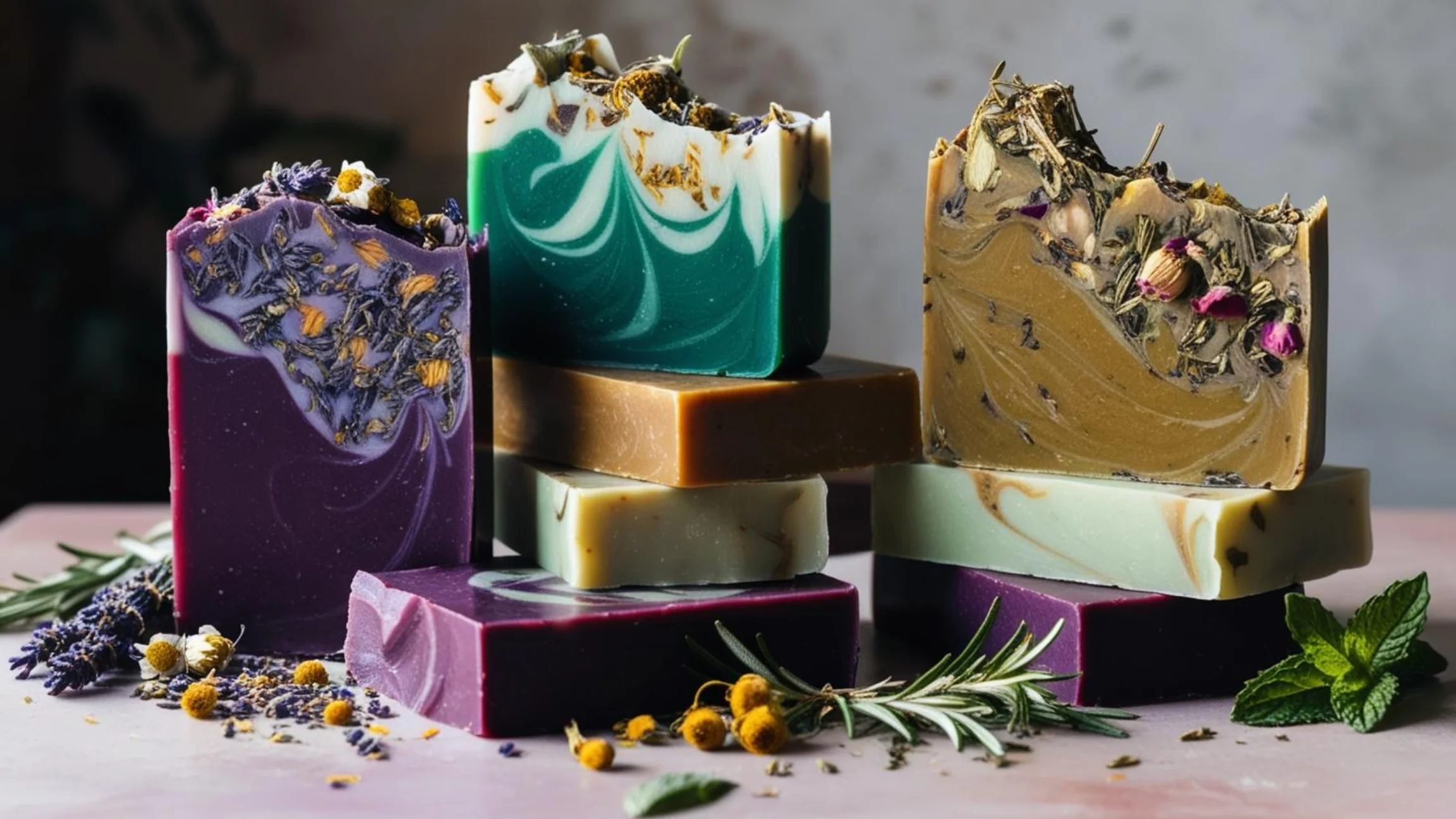
Soap makers can use various supplies and techniques to make creative self-care products. Melt and pour soap bases provide a foundation for creating multi-layered visual artwork. When crafting unique soap designs, you can embed soap making supplies into clear bases; this includes dried botanicals or pigments. Here are some innovative soap making techniques for unique designs:
Embedding Botanical Elements
Embedding botanical elements helps create unique textures and natural accents in the final product. The technique entails placing dried seeds and flowers into the liquid base; they can remain in place when the soap sets. Botanicals create a rustic appearance that makes the product stand out. When infusing botanical elements, monitor the temperature to prevent the plant materials from shifting and settling at the bottom.
Pouring Distinct Layers
Pouring distinct layers into soap molds creates horizontal rows of contrasting colors. Let each band harden slightly before adding the next mixture; this lets you create sharp transitions. The layering format method allows you to construct unique color gradients.
To enhance separation between the layers, spray rubbing alcohol onto the set surface before pouring the next color batch. The alcohol can eliminate air bubbles and create a strong bond between the different layers; this helps prevent the individual segments from coming apart when the bar is cut. Pouring the warm mixture gently over a spatula may prevent the fresh batter from piercing the bottom crust. Crafters should work in slow stages to avoid forming swirls in their designs.
Molding Geometric Shapes
Some soap making professionals mold geometric shapes by selecting and using specialized molds. If you use angular cavities, you can produce triangles, squares, or multi-faceted blocks. Flexible silicone soap making supplies permit the removal of stiff bars without damaging their sharp corners. To create a flat surface, artists can place their molds on level tables before they pour the warm liquid. Since uneven cooling distorts crisp edges, the temperature of the drying area must be stable. If the melt-and-pour base fills the form completely, the soap is able to showcase sharp angles.
Blending Natural Additives
Blending natural additives infuses texture and color into the soap. Creators sometimes incorporate natural clays or nourishing butters into the liquid mixture. To keep the texture smooth, artisans may pre-mix fine powders with some liquid before adding them to the main batch. Whisking during the preparation stage helps prevent clumping that spoils the visual appeal of a bar. Distributing the natural additives evenly provides a consistent texture across the final product. Sift dry ingredients beforehand to prevent lumps from getting trapped inside the hardening block. Creators can adopt strategies when blending natural items, such as:
- Melting solid plant butters
- Stirring mineral clays
- Suspending dense fruit seeds
Texturing Top Waves
Texturing top waves gives soap bars a three-dimensional surface that mimics moving water. This styling method turns a flat product into a sculpted art piece. Proper timing helps prevent the liquid from flattening out before the peaks hold their shape. To create permanent peaks, soap makers can shape the thickening batter with spoons or combs; they sculpt the ridges once the mixture hardens.
Evaluate Soap Making Supplies
Selecting different soap making supplies, such as molds, bases, and specialized additives, allows you to turn ordinary ingredients into distinct visual art. You can experiment with physical styling methods; this allows you to make designs that stand out. Visit a reputable apothecary to learn more about their products.