


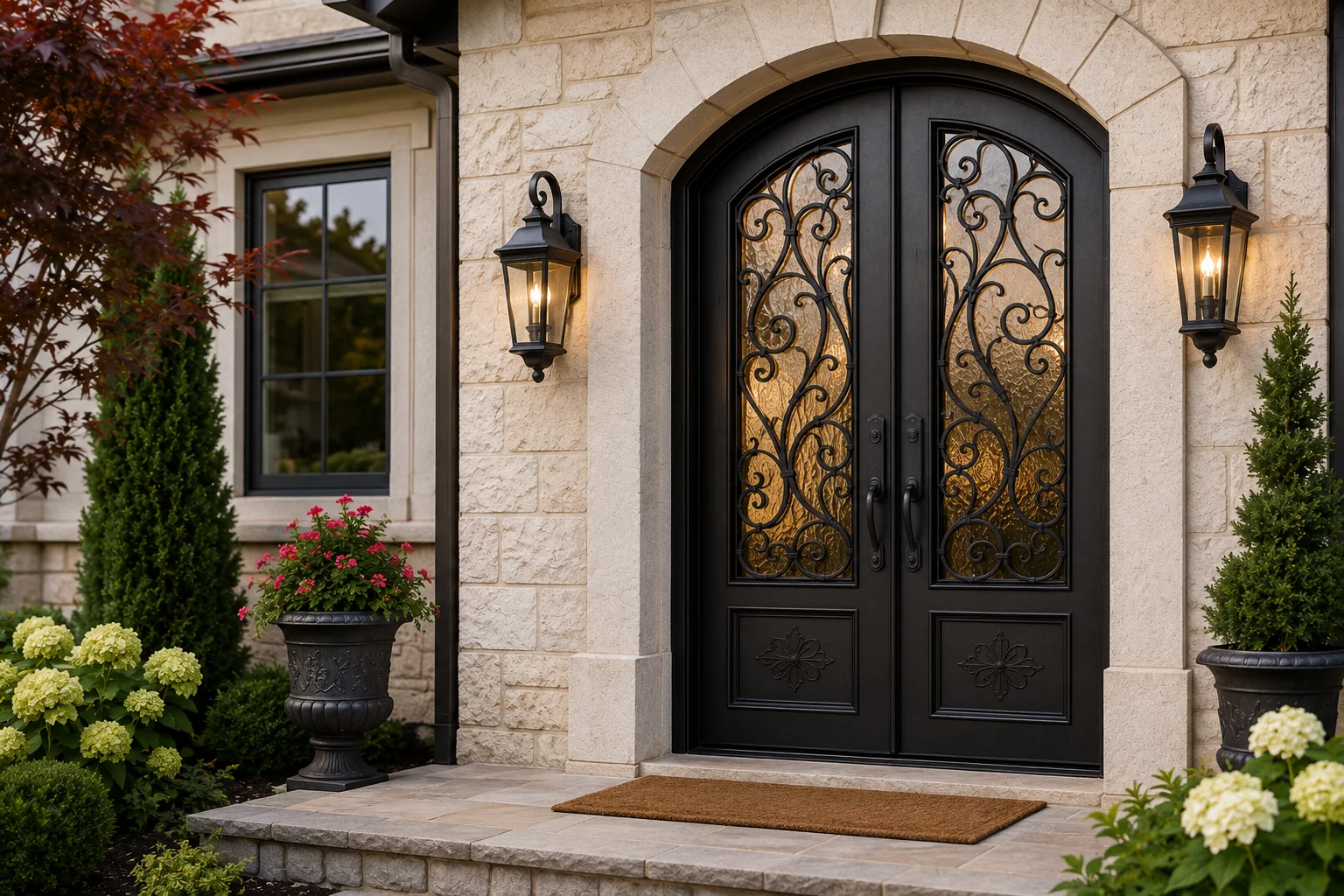
Custom iron doors allow homeowners to select design elements that suit their home’s architectural style and functional needs. Options such as door style, configuration, glass, finish, and hardware influence the door’s overall appearance and performance. Coordinating these elements with the home’s existing features can create a cohesive, well-integrated entrance. Here is a look at the key ways to customize an iron door for your home:
Explore Door Designs
Design style establishes the architectural character of an iron door and should complement the home’s existing features. Custom fabrication replaces standardized patterns with design details selected for the specific project. Traditional iron doors often feature scrollwork, decorative curves, and forged ornamentation, while contemporary designs use clean lines and restrained detailing.
Transitional designs combine elements of traditional and contemporary styles for a balanced appearance. The selected design details guide the fabrication process, from the overall pattern to individual decorative elements. Homeowners also choose among single, double, pivot, and interior door configurations based on the location and intended use of the door.
Single and double doors suit exterior entrances, while pivot doors create a distinct entry configuration with a central pivot point. Interior iron doors bring custom ironwork into spaces such as offices, studies, and other rooms within the home. Selecting a style and configuration that align with the home’s architecture creates a consistent look between the door and surrounding features.
Select a Door Configuration
The configuration of an iron door determines how the entrance is divided and how the surrounding opening is arranged. The size and proportions of the entryway help determine whether a single panel, paired panels, or a larger multi-panel system suits the space. Double doors divide the opening between two panels, while pivot doors use a central or offset pivot point to control the door’s movement. Transoms add a glazed or decorative section above the door, increasing the overall height of the entrance without changing the main door panel.
Sidelights add fixed panels beside the door and provide additional glass within the entry assembly. Sidelights and transoms frame the main door while extending the visual proportions of the opening. Sliding doors move horizontally along a track, making them suitable for openings where a traditional swing path is impractical. Bi-fold systems use hinged panels that fold toward the sides of the opening, creating a wider passage when fully opened. For interior applications, the configuration should correspond to the room layout, available clearance, and desired separation between spaces.
Customize the Glass Features
Glass selection affects the door’s appearance, privacy, and light transmission. Textured glass obscures direct views while allowing daylight to enter, and different textures create varying levels of privacy. When selecting glass for an iron door, evaluate how much visibility and natural light the entrance requires. Decorative finishes add visual detail without altering the surrounding ironwork, while clear glass provides an unobstructed view through the glazed sections.
Choose a Door Finish
Custom iron doors are available in a range of finishes, including brass, pewter, coal, penny, and other options. Each finish gives the iron a distinct color and surface appearance. Finish selection should complement the home’s exterior materials, architectural style, and existing metalwork.
Because exterior doors are exposed to changing weather conditions, the finish also serves as part of the door’s surface protection. Sunlight, rain, temperature fluctuations, and moisture contribute to surface wear and corrosion over time, so proper care helps preserve the finished surface. Regular maintenance keeps the finish looking consistent and addresses surface buildup before it affects the door’s appearance. The available finishes also extend to custom iron gates and windows, allowing related architectural elements to share the same finish. Matching finishes across these features creates visual continuity between the home’s exterior ironwork.
Start Your Iron Door Project
Custom iron doors require coordinated design selections, glass, and finishes. The customization process uses these options to create a door that matches your specific aesthetic and functional requirements. Design consultations allow professionals to refine your door selections, approve custom details, and prepare the project for fabrication. Contact a custom door service team to discuss your project.