


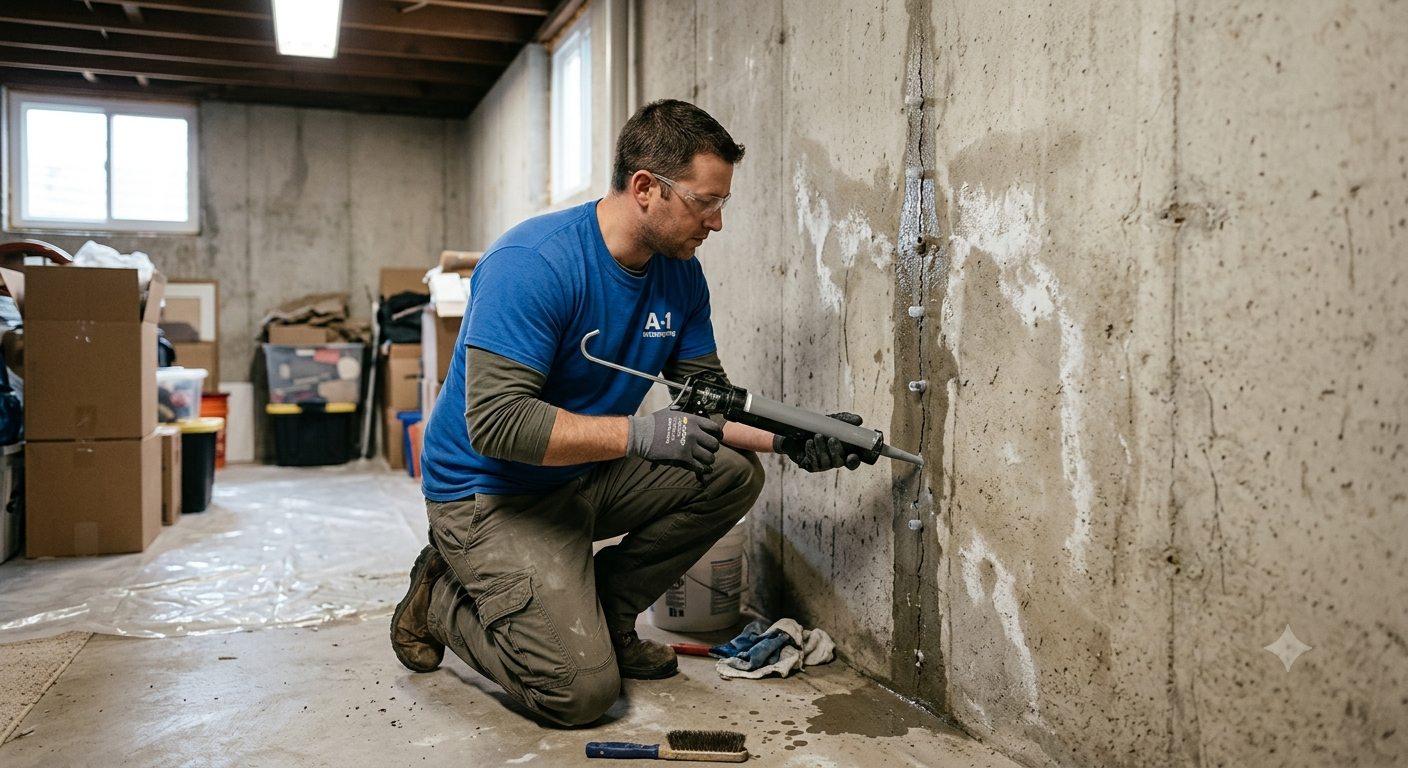
Leaking basement walls are typically caused by groundwater pressure, poor drainage, or cracks that allow moisture to enter the foundation. The most effective repairs often involve installing an interior drainage system that captures water before it reaches the basement floor and redirects it to a sump pump or drainage outlet. A perimeter drainage system installed beneath the slab collects seepage along the foundation walls and channels it away. Here’s how the process works to fix leaking basement walls:
Drainage System Installation
Professionals begin a drainage system installation by preparing the interior perimeter along the foundation walls. They excavate a trench beside the footings to create space for a sub-floor drainage pipe system. To establish a continuous channel that promotes proper water flow, contractors use advanced solutions such as dual-chambered gate drains. These perimeter drainage lines include accessible covers, allowing the system to be flushed and maintained over time. Drainage system installation helps fix leaking basement walls by reducing the hydrostatic pressure caused by rising groundwater levels. Underground channels collect water that enters through wall-floor joints and redirect it away from the foundation; this prevents further moisture intrusion into the basement.
Exterior Membrane Application
An exterior membrane application begins with excavating the soil around the home’s outer perimeter to expose the foundation walls. Technicians dig down to the footing level and remove accumulated dirt, debris, and any existing coatings. Before applying protective materials, professionals inspect the exposed concrete for cracks or other defects to make sure the foundation is properly prepared. Some contractors shift their focus to crawl space encapsulation projects during the winter months.
Once the foundation surface has been prepared, professionals apply a waterproof tar coating and membrane to the exterior walls. This durable barrier seals the foundation and prevents moisture from the surrounding soil from penetrating into the basement. During periods of heavy rainfall or saturated soil conditions, the membrane helps keep the foundation protected from constant exposure to water.
Specialized Sealant Injection
Experts fix leaking basement walls by creating a waterproof barrier that blocks groundwater from entering through cracks and gaps. Specialized sealant injection repairs openings in poured concrete walls and structural I-beam pockets by injecting material deep into the voids. As the sealant expands, it fills the cracks and seals pathways where water could penetrate the foundation. Because this process targets the interior of the wall structure, it eliminates the need for extensive exterior excavation. After curing, the sealant remains flexible, allowing it to move with the foundation during seasonal changes without cracking, tearing, or separating from the concrete.
Vapor Barrier Mounting
Vapor barrier installation involves securing plastic sheeting over basement walls to prevent moisture from entering the living space. These durable sheets are fastened tightly to the foundation to prevent sagging, shifting, or separation over time. This method helps address leaking basement walls by containing water seepage behind the barrier and directing it downward into a drainage system.
By limiting moisture exposure, a vapor barrier helps prevent musty odors, mold growth, and wood rot in structural components. The installation also helps improve energy efficiency by reducing cold air infiltration and creating an additional layer of insulation between the basement and the outdoor environment. Properly overlapping and sealing the sheets prevents ground moisture from migrating into the home, helping maintain healthier indoor air quality and a drier basement environment. Here are the material standards and integration requirements for vapor barriers:
- Fire-rated materials
- Thick, puncture-resistant materials
- Durable plastic sheeting
Sump Pump Connection
Professionals install sump pumps in a basin beneath the basement floor to collect and remove accumulated water. Technicians excavate the pit at the lowest point of the foundation slab and install a sealed sump liner to contain the pump equipment. This automated system helps lower groundwater levels beneath the foundation and reduces hydrostatic pressure that can force moisture through basement walls and floors. Once water collects in the basin, the pump moves it through discharge pipes that carry it away from the home’s foundation. Properly directed drainage prevents water from pooling around the perimeter; it also reduces the risk of it flowing back into the basement.
Fix Leaking Basement Walls Today
Basement repairs address moisture issues by targeting the source of leaks and preventing further water intrusion. Prompt repairs also help protect the foundation and maintain a dry basement environment. Contact a reputable waterproofing specialist to learn more about their services.