


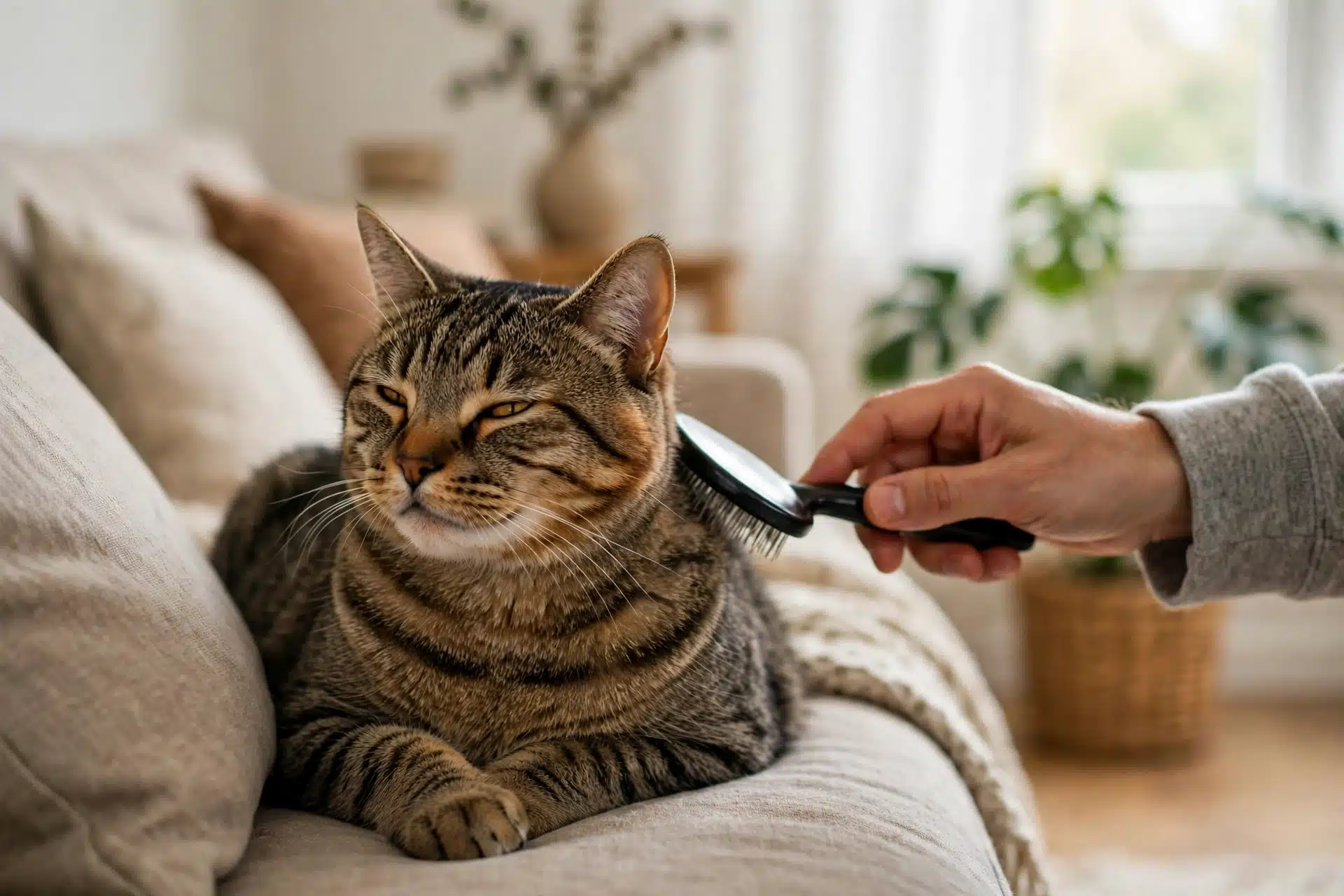
Cats are famously good at keeping themselves clean. A healthy cat spends a large share of its waking hours licking and smoothing its own coat, and most of the time that is enough. But it is not the whole job. A cat cannot trim its own nails, reach every patch of a long coat, or check its own ears. How to groom a cat at home is really about filling in those gaps, calmly and on a regular schedule.
This guide covers the full routine: brushing, tangles, the occasional bath, nail trims, ear and eye checks, and tooth care, plus what to do when your cat hates all of it and when to hand the job to a professional. You do not need expensive equipment, just the right tools, a quiet moment, and a little patience. Good pet care tips start with small habits done regularly, and grooming is one of the best of them.
Quick Facts
- Brushing: once a week for short-haired cats; daily for long-haired cats
- Nail trims: every two to four weeks
- Baths: rarely needed for most cats; every few months at most
- Ear checks: once a week
- Teeth: brush daily if you can; a few times a week at minimum
- Best time to groom: after a meal or a nap, when your cat is relaxed
- Session length: start with five minutes and build up slowly
- Tools: slicker brush or comb, cat nail clippers, styptic powder, cat shampoo, cotton balls
Why Grooming Matters When Cats Groom Themselves
A cat’s tongue is covered in tiny backward-facing spines that pull loose hair out of the coat. Much of that hair ends up swallowed, which is why hairballs happen. Regular brushing removes loose fur before your cat swallows it, cutting down on hairballs and the digestive trouble they can cause. Brushing also spreads the skin’s natural oils through the coat, keeping it softer and healthier.
Long-haired cats need the most help. Their coats can mat in a day or two, especially in high-friction areas such as the armpits, behind the ears and along the belly. Once a mat tightens against the skin it pulls constantly, hurts, and can hide skin problems underneath. Grooming is also a health check disguised as a cuddle: a cat that is groomed regularly gets used to being handled, which makes vet visits easier, and it means you will spot changes sooner, such as a lump, a sore patch, a flea, or a mat forming in a hidden spot.
What You Need: A Simple Grooming Kit
A slicker brush is the workhorse for most coats. Its fine, bent wires catch loose undercoat without scratching the skin when you use light pressure. A stainless steel comb is the second essential: run it through after brushing and it will find tangles the brush missed, right down to the skin. For short-haired cats, a rubber curry brush or grooming glove works well and feels more like petting than grooming.
Cat-specific nail clippers come next. Small scissor-style or guillotine-style clippers made for cats give far better control than human clippers, and you should never use dog clippers on a cat’s finer nails. Keep styptic powder nearby: it stops bleeding fast if you nick the quick, the pink part inside the nail. For baths, buy a shampoo made for cats, since human and dog shampoos are the wrong pH for a cat’s skin. A few old towels, a non-slip mat and some cotton balls round out the kit, and a few treats help too: a small reward after each session teaches your cat that grooming ends well.
How Often Should You Groom Your Cat?
There is no single schedule for every cat. Coat length is the biggest factor, followed by age, weight and how well your cat grooms itself.
| Coat type | Brushing | Nail trim | Ear check | | — | — | — | — | | Short-haired | Once a week | Every 2–4 weeks | Weekly | | Medium-haired | Two to three times a week | Every 2–4 weeks | Weekly | | Long-haired | Daily | Every 2–4 weeks | Weekly | | Hairless (Sphynx) | No brushing; weekly wipe-down | Every 2–4 weeks | Weekly |
During spring and autumn shedding seasons, brush more often whatever the coat type. Older and overweight cats often need extra help too, because arthritis or a rounder belly makes it harder to twist around and reach the back end. Teeth are the exception to the coat rule: every cat benefits from tooth brushing with a cat-specific toothpaste, daily if possible, or at least a few times a week. Dental problems are among the most common health issues vets see in cats, and they creep up silently.
Brushing: The Heart of the Routine
Pick a calm moment, ideally after a meal or a nap, when your cat is already settling down. Keep your first sessions short and let the cat leave if it wants to. Five minutes of relaxed brushing beats a twenty-minute wrestling match every time.
Start with long, gentle strokes down the back, brushing in the direction the hair grows. Work from head to tail in short, even strokes, using light pressure. Think massage, not scrubbing. If the brush catches, stop and work the tangle out gently with your fingers or the comb rather than pulling through it.
For short-haired cats, a slicker brush or rubber curry brush is usually enough: once a week, twice during heavy shedding, finishing with the steel comb. For long-haired cats, start with a wide-toothed comb to separate tangles, then follow with the slicker brush. Pay special attention to the spots where mats form first: behind the ears, under the collar, the armpits, the belly and between the back legs. Go slowly there and reward calm behaviour. Long-haired breeds such as Persians, Maine Coons and Ragdolls need daily brushing to stay mat-free, and a daily five-minute session is far easier than a weekly battle with a matted coat.
Watch your cat as you work. A relaxed cat will purr or simply go still. Tail lashing, flattened ears, skin twitching along the back, or a sudden turn of the head toward your hand are all signs to stop. Ending the session while your cat is still calm is the best way to make the next one easier.
Dealing With Mats and Tangles
The golden rule is simple: never pull a mat out, and never cut one out with scissors. Cat skin is extremely thin and it folds underneath a mat, so a scissor blade can cut skin you cannot even see.
If you find a small tangle, hold the base of the mat between your fingers so you are not pulling on the skin, then work it apart gently with your fingers or a wide-toothed comb, a few strands at a time. A little cornstarch or a detangling spray made for cats can help loosen the fibres. For a tight mat close to the skin, leave it to a professional groomer or your vet. Prevention is far easier than removal: daily brushing of the friction zones stops most mats before they start.
Bathing Your Cat
Most cats rarely need a bath. Their own grooming handles everyday dirt, and brushing covers the rest. A bath is for specific situations: the cat got into something sticky or smelly, your vet prescribed a medicated shampoo, or the cat is a hairless breed such as a Sphynx, whose skin oils build up without fur to absorb them.
Set everything up before you bring the cat in. Fill a sink or tub with a few inches of lukewarm water, never hot, and put a non-slip mat down so your cat feels steady. Wet the coat slowly with a jug or sponge rather than a running tap, which most cats find frightening. Lather with cat-specific shampoo, keeping it away from the eyes and ears, then rinse thoroughly. Shampoo left in the coat irritates the skin and gets licked off, so rinse longer than you think you need to. Dry your cat with a towel, patting rather than rubbing, and keep it somewhere warm until the coat is dry. Cats chill quickly when wet, and kittens especially so: never bathe a kitten under two months old. If your cat panics in water, stop. A damp cloth or grooming wipe handles most spot cleaning.
Trimming Nails Safely
Untrimmed nails can curl, snag on fabric, scratch you during play, and in older cats they can grow into the paw pad. Most indoor cats need a trim every two to four weeks. Start by getting your cat used to having its paws handled: over several sessions, hold and massage each paw for a few seconds, gently pressing the pad so the claw extends, then let go and offer a treat.
Sit with the cat in your lap, press the paw pad until the claw comes out, and look for the quick, the pink area inside the nail where the blood supply runs. In clear nails it is easy to see; in dark nails, trim only the very tip to stay safe. Hold the clippers at a slight angle and snip just the sharp tip in one confident motion. If you cut into the quick, the nail will bleed. Stay calm, press styptic powder onto the tip, and hold it there for a moment. It looks worse than it is, and the bleeding stops quickly. Do one paw at a time if that is all your cat tolerates. Two paws today and two tomorrow still counts as a full trim.
Ears, Eyes and Teeth
Check the ears once a week. Healthy ears are pale pink, clean and odour-free, and a small amount of wax is normal. Dark, crumbly debris, a strong smell, redness, or your cat shaking its head and scratching can point to ear mites or an infection, and your vet should take a look. To clean an ear that only needs a light wipe, use a vet-approved ear cleaner on a cotton ball and clean only the outer, visible part. Never push a cotton swab into the ear canal: it pushes debris deeper and can damage the eardrum.
Eyes need even less. A little clear discharge in the corner is normal in some cats, and a damp cloth wipes it away. Redness, swelling, yellow or green discharge, cloudiness, or a cat pawing at its eye are all reasons to call the vet.
Teeth are the step most owners skip, and the one that matters most for long-term health. Brush your cat’s teeth with a cat-specific toothbrush and toothpaste, daily if possible. Never use human toothpaste: cats swallow it, and its ingredients are not made for them. If daily brushing is not realistic, a few times a week still helps. Start slowly, letting your cat lick a little toothpaste from your finger before you introduce the brush.
Grooming a Cat That Hates Being Groomed
Some cats simply do not enjoy being handled, and forcing the issue makes everything worse. The fix is not a stronger grip; it is a slower start. Break the routine into tiny steps and reward each one. Day one might be nothing more than letting the brush sit next to your cat while it eats. Day two, one stroke on the back, then a treat. Build up over days or weeks until a short session feels normal.
Keep sessions short and always end on a good note. If your cat tolerates two minutes, stop at two minutes, give a treat, and put the tools away. Never scruff, pin or wrap a struggling cat to finish a job: it destroys trust and teaches the cat that grooming is something to fear. For cats that bite or panic, a professional groomer or your vet can help. They see difficult cats every day, and there is no shame in letting them do in ten minutes what might take you an hour of stress.
Kittens, Seniors and Special Cases
Kittens are the easiest place to start. Begin handling them gently from a young age: touch the paws, lift the ears, run a soft brush over the back for a few seconds. These tiny sessions teach a kitten that hands and tools are safe, and that lesson lasts a lifetime. Keep it to a minute or two, always end with play or a treat, and never bathe a kitten under two months old.
Senior cats need the opposite kind of attention. Arthritis makes it painful to twist and groom, so older cats often arrive with a matted back end and a greasy coat. Brush them gently, support their body rather than pulling them into position, and keep sessions shorter. A senior cat that suddenly stops grooming itself altogether may be in pain or unwell, and that is worth a vet visit. Overweight cats have the same problem: they cannot reach their own back end, so check that area every week and brush it for them. Hairless breeds need a weekly wipe-down or bath to remove body oil, plus regular ear cleaning, since wax builds up faster without ear tufts to catch it.
Common Mistakes to Avoid
The most common mistake is grooming at the wrong moment. A cat that has just woken up full of energy, or one that is hungry and pacing, is not going to sit still for a brush. Wait for the calm window after a meal or a nap. The second is using the wrong tools: human shampoo, dog clippers, a human hairbrush. Each is either too harsh or too weak for a cat. The third is the marathon session. Trying to do brushing, nails, ears and teeth all in one sitting with a cat that has never been groomed is a recipe for a scratched arm and a cat that hides under the bed for a day. Spread the jobs across the week: brushing on Monday, nails on Wednesday, a quick ear check on Friday.
Finally, do not ignore the warning signs. A cat that hisses, bites or bolts is not being difficult; it is telling you to stop. Pushing through teaches the cat that its signals do not work, and the next session will start with even less trust.
When to Call a Professional or a Vet
Home grooming covers most of a cat’s needs, but some jobs belong to someone else. Tight mats close to the skin, a coat that has matted all over, a lion cut or any clipping with electric clippers, and any cat that becomes genuinely aggressive during grooming are all jobs for a professional groomer. Your vet is the right call when grooming reveals something wrong: a lump or sore that was not there before, bald patches, flaky or red skin, ears that smell or discharge, or a cat that has suddenly stopped grooming itself. A good rhythm for many owners is home grooming most of the time, with a professional groom every couple of months for long-haired cats.
Frequently Asked Questions
How often should I groom my cat at home?
It depends on the coat. Short-haired cats usually need brushing once a week, medium-coated cats two or three times a week, and long-haired cats daily. Nail trims every two to four weeks, weekly ear checks, and tooth brushing a few times a week suit most cats. Brush more often during spring and autumn shedding seasons.
Do cats need baths?
Most cats do not need baths at all. Their own grooming handles everyday dirt, and brushing covers the rest. A bath is for specific cases: the cat got into something sticky or smelly, your vet prescribed a medicated shampoo, or the cat is a hairless breed. When you do bathe a cat, use lukewarm water, cat-specific shampoo, and dry it somewhere warm afterwards.
How do I groom a cat that hates being brushed?
Start very slowly. Let the cat sniff the brush, then try a single stroke on the back followed by a treat. Build up over days or weeks, keep sessions to a few minutes, and always stop while your cat is still calm. Never hold a struggling cat down to finish. If your cat bites or panics, a professional groomer can do the job safely.
Is it safe to cut mats out of my cat’s fur with scissors?
No. Cat skin is very thin and it puckers up underneath a mat, so scissors can cut skin you cannot see. Work small tangles apart gently with your fingers or a wide-toothed comb, holding the base of the mat so you are not pulling the skin. Tight mats close to the skin should be removed by a groomer or vet.
How do I trim my cat’s nails without hurting it?
Press the paw pad gently until the claw extends, find the pink quick inside the nail, and snip only the sharp tip beyond it. Use small cat-specific clippers and keep styptic powder nearby in case of a nick. If your cat only tolerates one paw at a time, do one paw a day: that still counts as a full trim.
When should I take my cat to a professional groomer?
Book a groomer for tight mats, a fully matted coat, any clipping with electric clippers, or a cat that becomes aggressive during home grooming. Long-haired cats often benefit from a professional groom every couple of months on top of daily home brushing. See your vet instead if grooming reveals lumps, sores, bald patches, smelly ears or a sudden change in grooming habits.
Conclusion
How to groom a cat at home comes down to a short, regular habit: a brush a few times a week, a nail trim every few weeks, a quick look at the ears and teeth, and a bath only when one is genuinely needed. Done gently and consistently, it keeps the coat healthy, cuts down on hairballs, and gives you an early look at anything that might need a vet. Start small, pick a calm moment, and let your cat set the pace. If you want to check the background facts about feline care and anatomy, a general reference is a good place to start.
This article is general guidance for healthy adult cats and is not a substitute for veterinary advice. If your cat has a skin condition, an injury, or a health problem, speak to your vet before starting a new grooming routine.
